Kroger Daytime Store Operations
A look at how store preparedness and task execution facilitate customer satisfaction guarantee.
Role
UI/UX Designer & Researcher
Client
Kroger
Duration
4 years
Introduction
Grocery Retail Customer Activation
Kroger, one of the largest grocery chains in the United States, constantly strives to enhance its store operations through innovative solutions. As part of this endeavor, Kroger identified a need to streamline their day crew associates' operations to improve department preparedness. The focus was on ensuring tenured and onboarding employees had access to a digital mobility tasking solution to ensure customer activation.
Objective
To digitize store execution and management workflows, improving operational excellence and associate productivity. End-to-end design of store-walk tools and a seamless operational interface across departments (Produce, Grocery, Front End). Optimized for efficient store management, gap identification, and real-time improvement of floor standards.
Challenge
Kroger faced several challenges that necessitated transitioning its operations from a traditional paper-based system to a more efficient digital platform.
Key Challenges
Transition from Paper to Digital: The existing paper process was not only cumbersome but also led to significant paper shrink, which contradicted Kroger's zero waste initiatives. The objective was to mitigate these issues by transitioning to a digital solution.
Compliance and Empowerment: The chosen solution needed to comply with standard operating procedures (SOPs) while empowering employees to execute their tasks more efficiently. Ensuring that the digital solution was user-friendly and intuitive was crucial for its success.

My Role
Supporting Designer | Lead Researcher and Designer
Strategic Research & Analysis: I conducted immersive research to map existing manual workflows and identify key pain points in administrative documentation that contributed to operational friction.
System Design & Optimization: I co-designed a streamlined digital interface that transformed fragmented paper-based processes into a unified mobile workflow. My focus was on creating an intuitive user experience for both tenured staff and onboarding employees across Produce, Grocery, and Front End departments.
Data-Driven Impact: By optimizing task assignments and automating documentation, I directly reduced Time on Task, decreasing average audit duration from 45 minutes to 18 minutes. This allowed store leadership to reclaim approximately 27 minutes per audit, successfully redirecting critical labor hours back to customer-facing activities on the sales floor.
Partners
Kroger partnered with Deloitte and 84.51 to research, implement, and deploy Android native apps and cloud services designed for digital mobility. These apps were integral in ensuring seamless shift handoffs and executing daily tasks effectively.



Research Methods
-

Exploratory
Screener Surveys
Surveys - UserZoom, Qualtrics
Competitive Analysis
Literature Review/Document Analysis - SOPs, Research Artifacts, Dovetail Repository
-

Generative
User Interviews
Contextual Inquiry
Ethnographic
Participatory Design
-

Quantitative
Dynatrace - user taps and user journeys
Division/Regnional data insights, stats, and reporting - PowerBi Reporting
-

Qualitative
Usability Testing
Quality Assurance - Android Studio
Beta Testing paired with in-app feedback loops for development teams and business owners.
Process
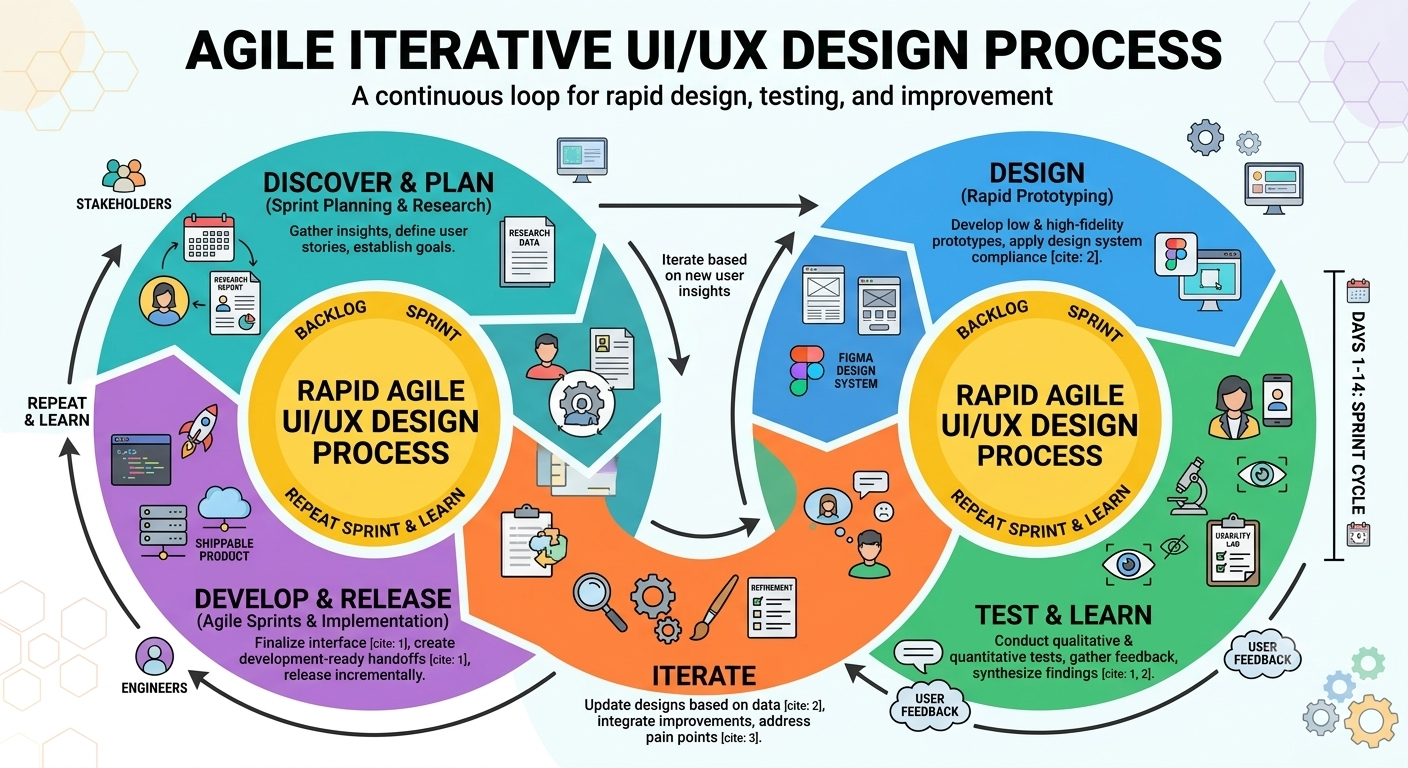
Ideation
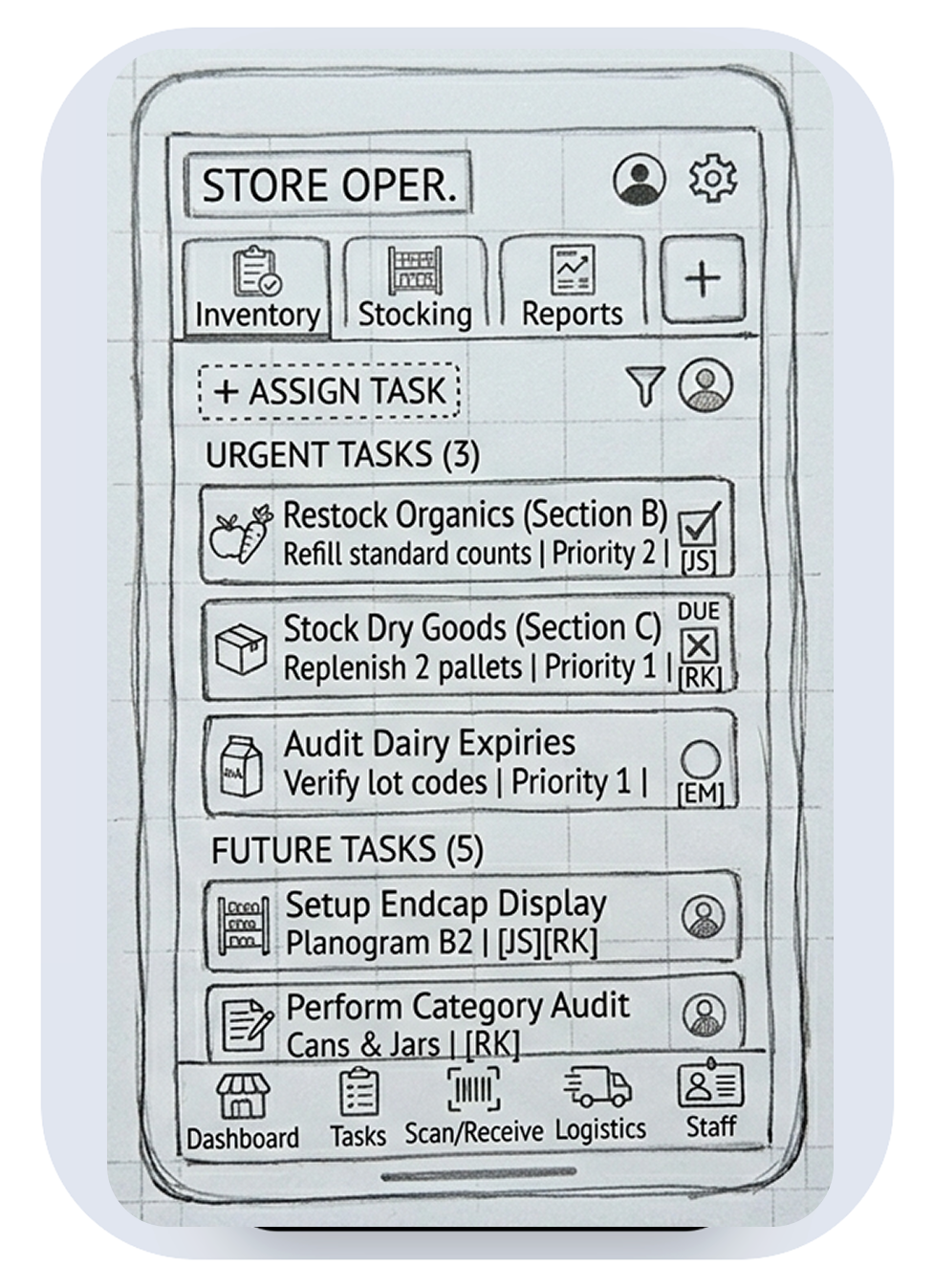
Sketches

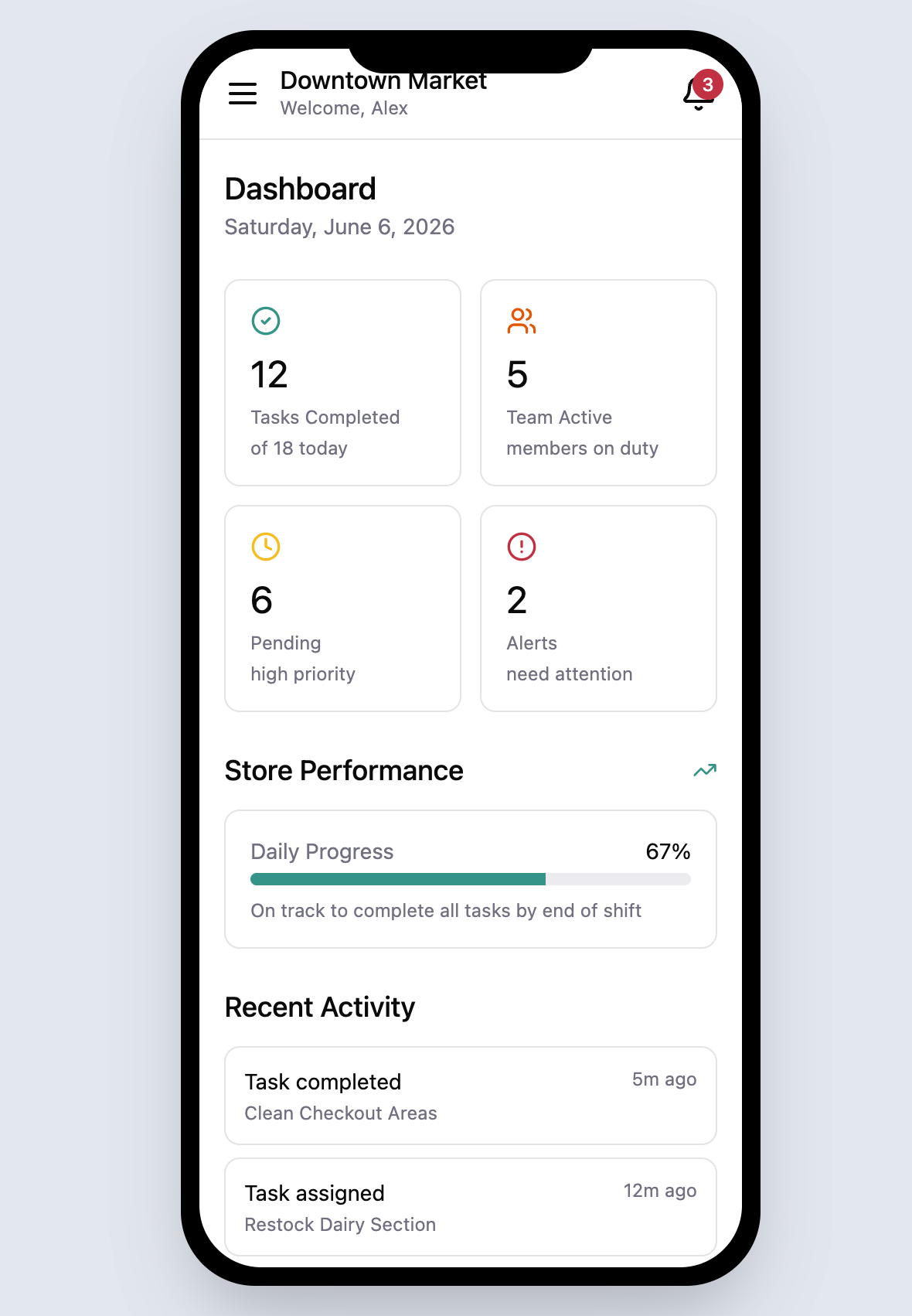
Early Wireframes

Iteration

Team collaboration efforts occurred at the beginning of a product cycle and depended on features and epic rollouts, as well as on technical debt and backlogs. Teams collected data insights from user feedback, behavioral analytics, store sales, and shrink metrics. After conducting the research synthesis, the team organized the feedback into affinity clustering sessions and importance/difficulty matrices to assess the most viable improvements to product features.
Other methods may include buy-a-feature, problem trees, creative matrices, and more.
Solution
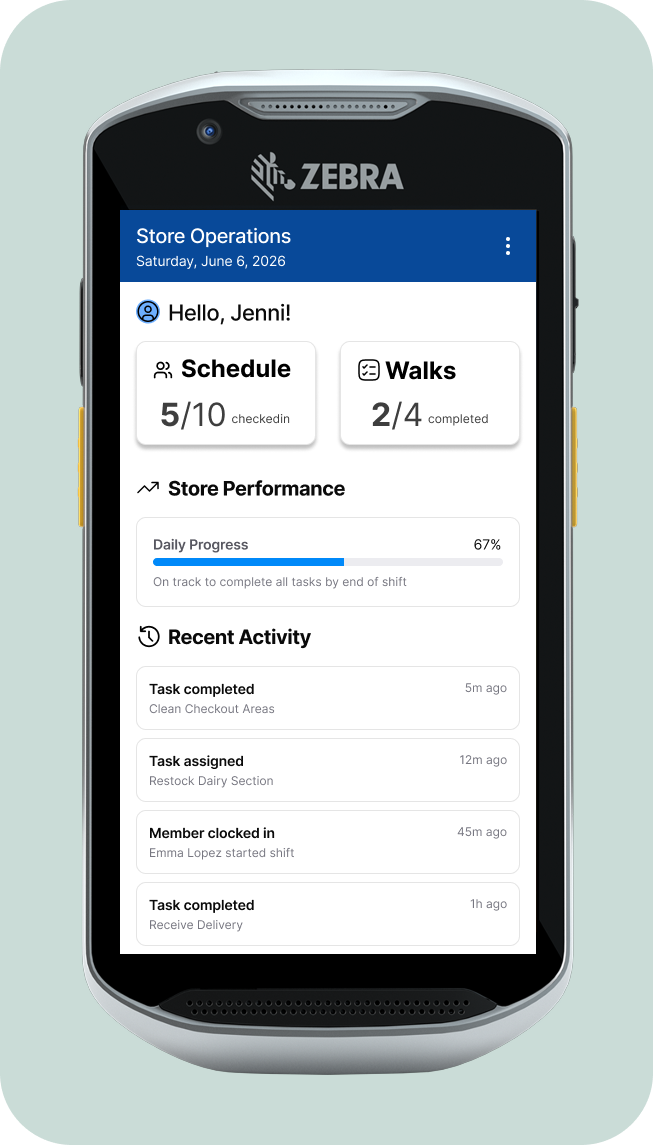
Enhanced Communication
The apps enabled real-time communication and updates, ensuring that all-day crew associates were on the same page about store operations.
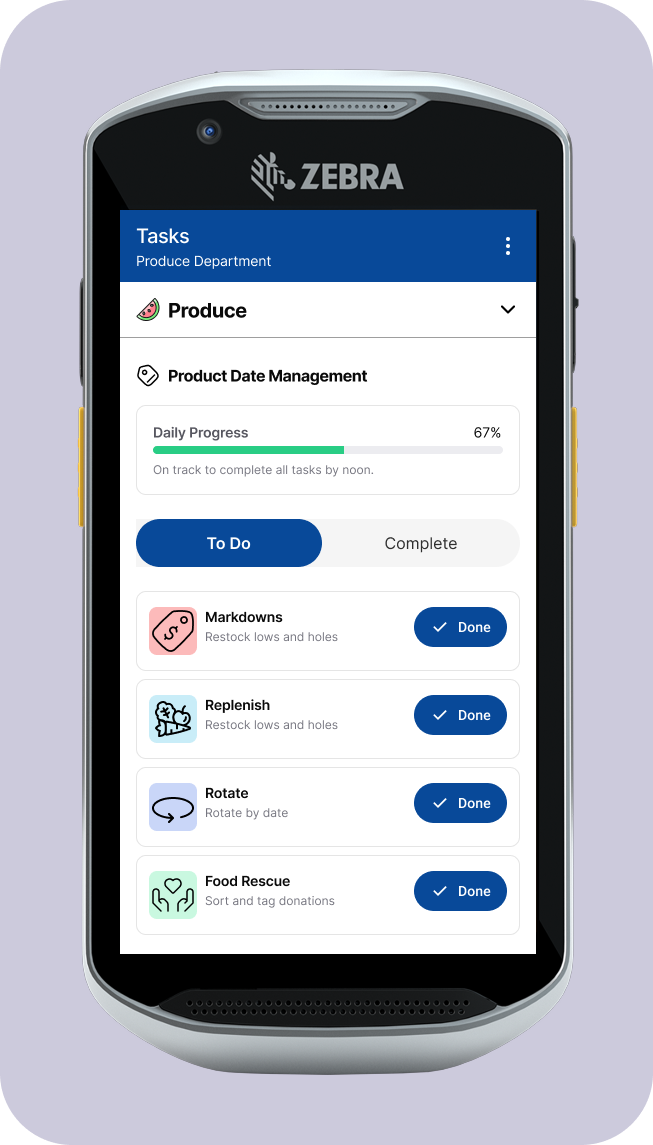
Efficient Task Execution
Efficient Task Execution: Employees could easily access and manage their tasks, track completion, and report any issues, thereby improving overall efficiency.
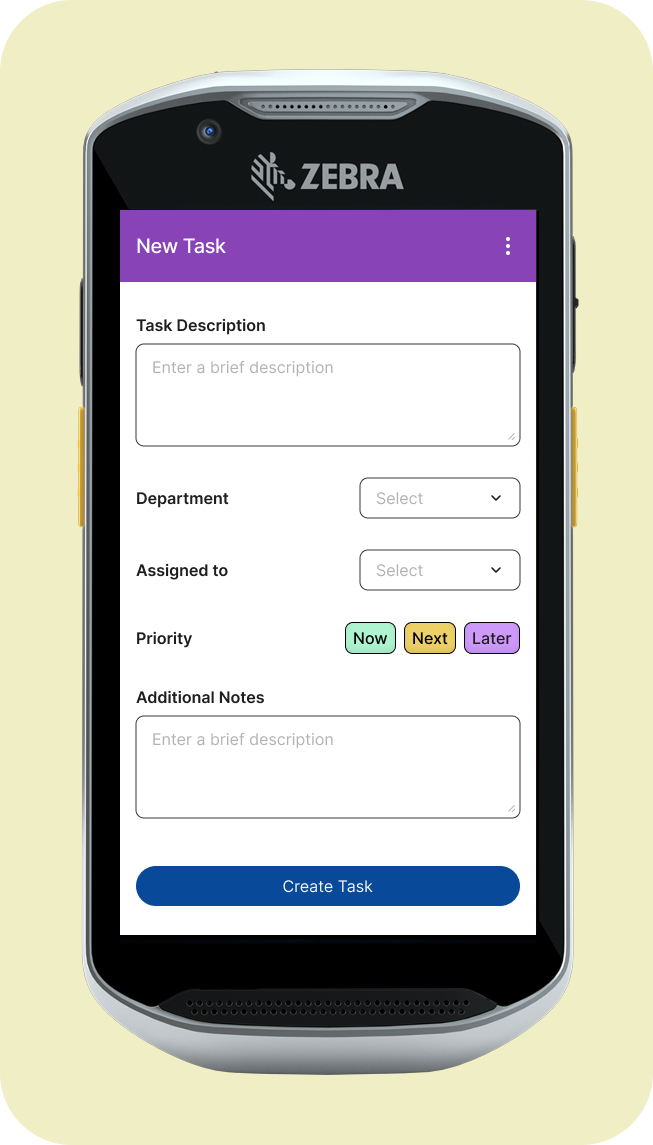
Data-Driven Insights
The digital platform enabled the collection of data for analysis to further optimize operations, enhance customer service, and reduce shrink.
"It makes it easy because it lets us know what needs to be done."
— Store Leadership
Data That
Tells a Story
Transitioning from manual paper processes to an Agentic AI and reasoning mobility solution resulted in a 60% reduction in total Time on Task, dropping the average store-walk duration from 45 minutes to just 18 minutes. By automating administrative documentation and optimizing processes, the application reclaimed approximately 27 minutes per audit—allowing enterprise managers to redirect high-value labor hours back to the sales floor to improve customer service and satisfaction.
Time to Task
Results
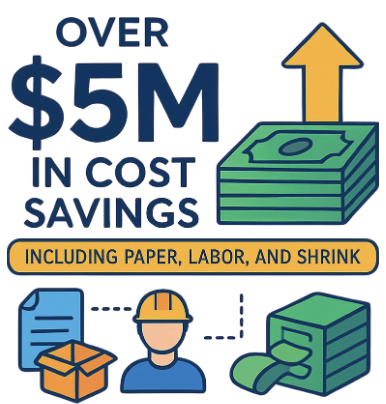
Cost Savings
Over $5 million in savings across paper, labor, and shrink, reducing operational costs.
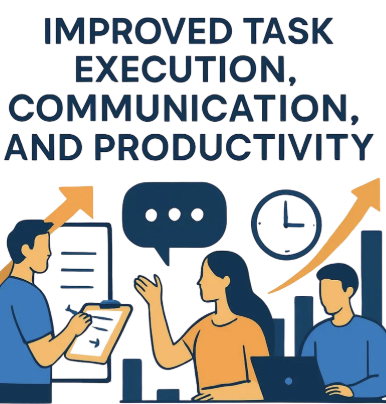
Increased Efficiency
Improved task execution and communication, resulting in higher productivity.
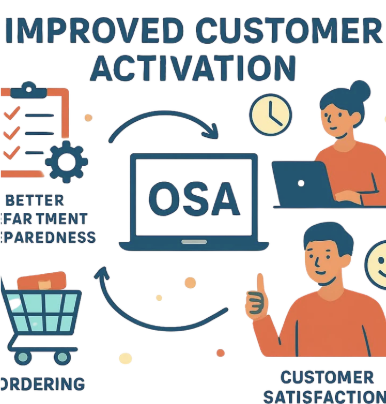
Customer Activation
Improved department preparedness, order accuracy, OSA, and customer satisfaction.
Conclusion

The successful implementation of the digital solution at Kroger demonstrates the potential of leveraging technology to enhance store operations. By integrating an Agentic AI platform, Kroger optimized scheduling and task execution strategies for in-store employees. This initiative led to significant improvements in department planning, OSA, order management, shrink reduction, and customer activation.
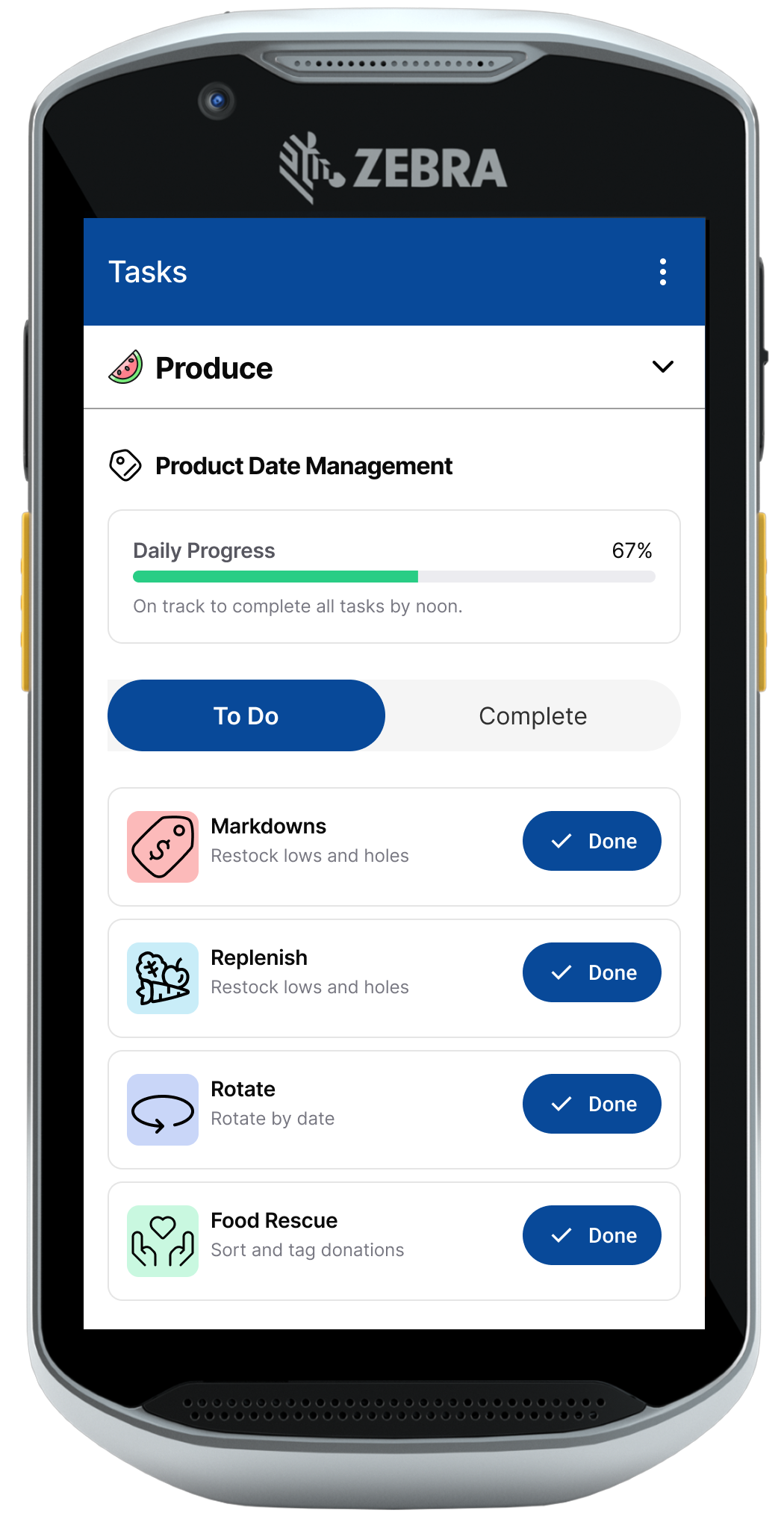
The case study on Kroger's store operations emphasizes the vital role that digital solutions play in enhancing efficiency and promoting sustainability. As businesses seek to adopt innovative technologies, the lessons learned from Kroger's experience can provide valuable guidance for future efforts in digital transformation and improving customer experiences.