
Kroger Digital Shelf Tags Pilot
Researcher and UI/UX Designer for scan coordinator, the store associate/end-user management of tags and signs utilizing third-party solutions and Telxon technologies to design Zebra technology solutions to reduce shrink and related labor variances.
Role
UI/UX Designer & Researcher
Client
Kroger
Duration
6 Months
Research Objectives
In major grocery retail environments, paper signs and tags are a high-priority task to meet customer needs and support competitive pricing. Scan coordinators oversee the whole-store setup of signs and tags, including third-party vendor solutions and services, to handle daily sign and tag operations and troubleshoot erroneous shipments.
Research teams collaborated with business owners and in-store execution teams to develop low-fidelity pilot solutions for deployment across the Mid-Atlantic and Cincinnati divisions. These teams gathered and organized qualitative research alongside data streams to enhance metrics related to store shrinkage, savings, and competitor analysis.
Our objective was to equip scan coordinators with solutions that reduce shrinkage and labor variances, thereby effectively supporting customer needs while ensuring competitive pricing and the customer satisfaction guarantee.

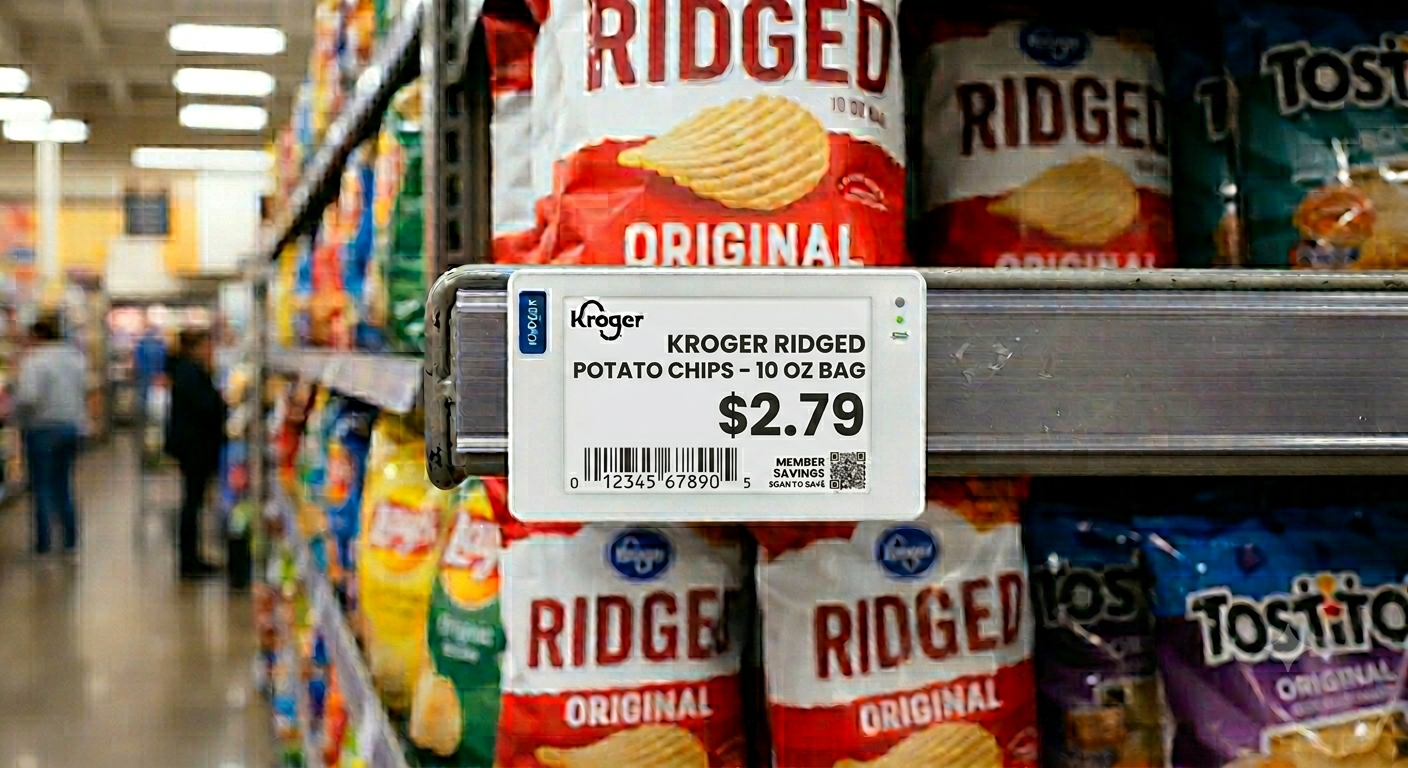
"It takes the entire shift to switch the tags on ad sales changeover day."
— Scan Coordinator
Key Findings
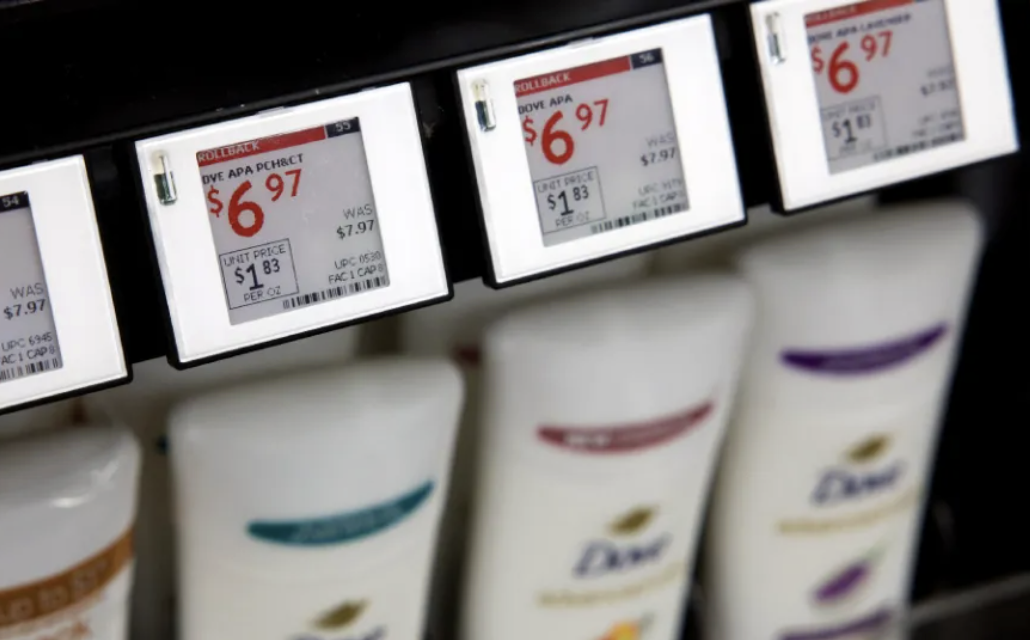
Scan coordinators needed extra staff to manage the high turnover of signs, tags, and displays for promotional events. To ensure compliance with standards, users relied on outdated technology and services to fulfill their daily responsibilities. This included user flows requiring enhancements to Telxon technology, an IoT stream that led to increased paper shrinkage, and recurring issues with third-party pre-printed solutions.
Competitors such as Walmart, Aldi, and European luxury grocers use digital hardware solutions for price tags to sWhile standard design practices try to eliminate workflow friction, enterprise safety design sometimes demands it. If an associate attempts to close a delivery session before confirming cold room relocation, a hard safety barrier triggers.treamline these labor-intensive processes, reduce paper shrink, and enhance dynamic pricing for customers.
Kroger’s pilot solution used competitive analysis to develop an improved solution compared to competitors. The pilot A/B tested two third-party hardware solutions in the MidAtlantic and Cincinnati divisions, emphasizing pick-to-light as a value driver for Pickup and third parties such as Shipt.
Read the full article about Walmart’s solution: https://corporate.walmart.com/news/2026/03/02/how-the-shelf-got-smarter-and-our-jobs-got-easier
Vusion: https://www.vusion.com/solutions/store-operational-excellence/

Antiquated and Laborious UX Mapped and Transformed
The physical processes and steps for administering paper signs and tags proved error-prone and wasteful.
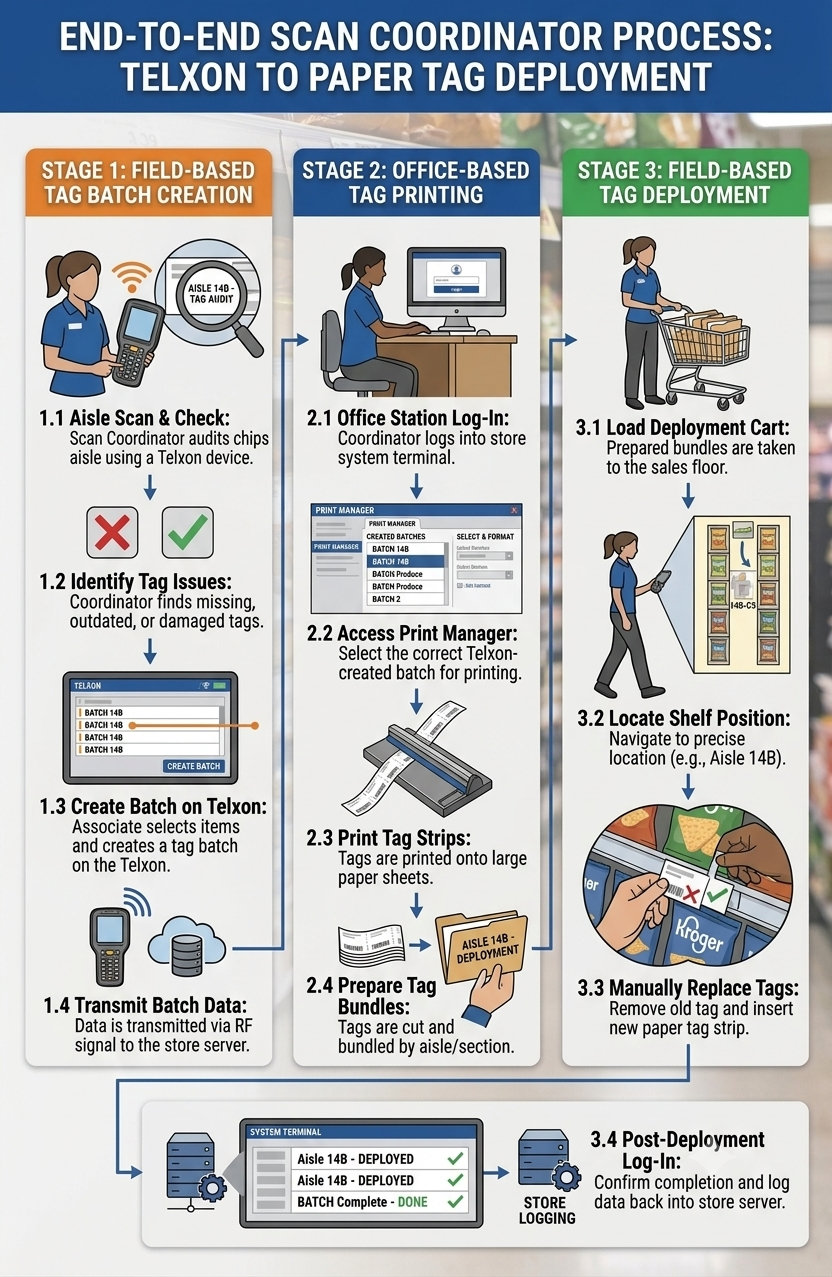
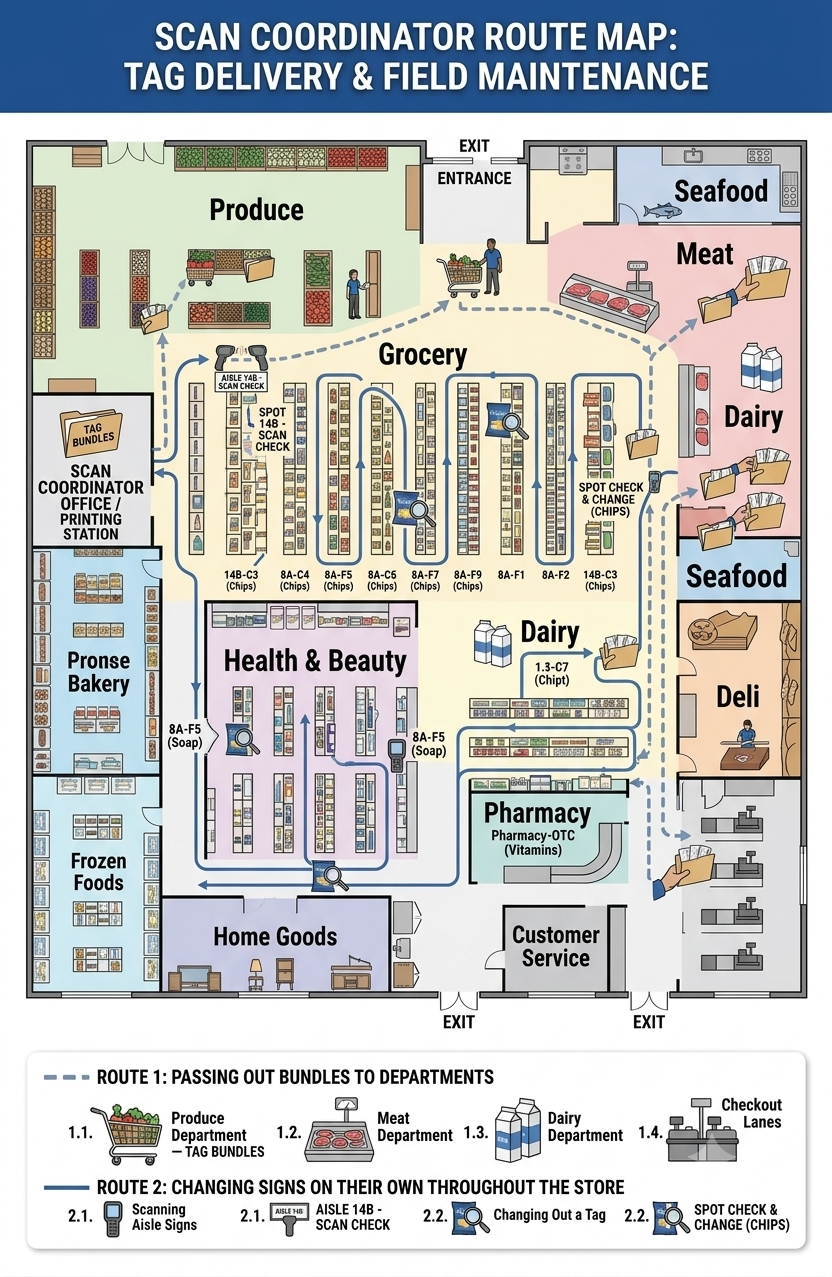
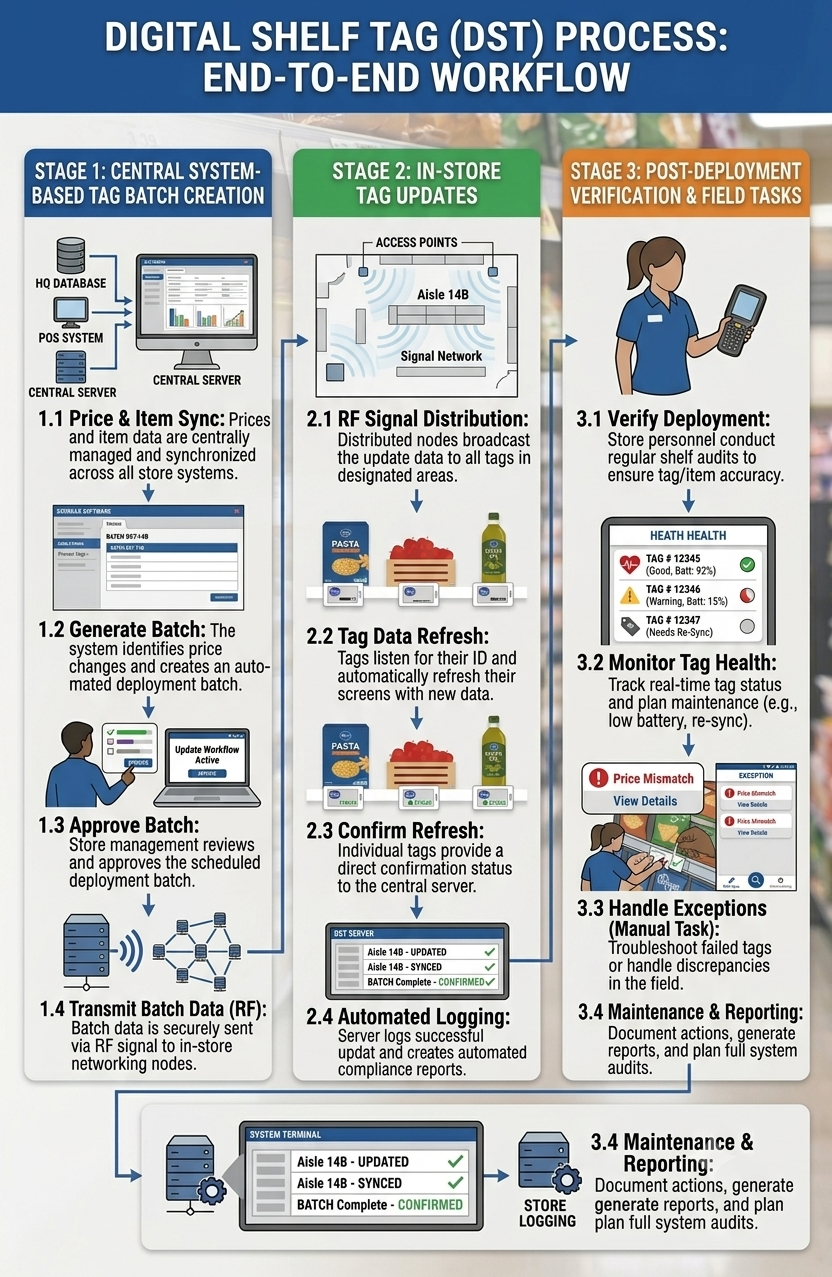
Coordinators were using Telxon devices to create batch tag updates, then returning to their offices to print batches on various paper sizes for one or two tag types, and to print other tags and signs on larger or smaller paper, resulting in enormous amounts of paper waste. Any errors required starting the process over again.
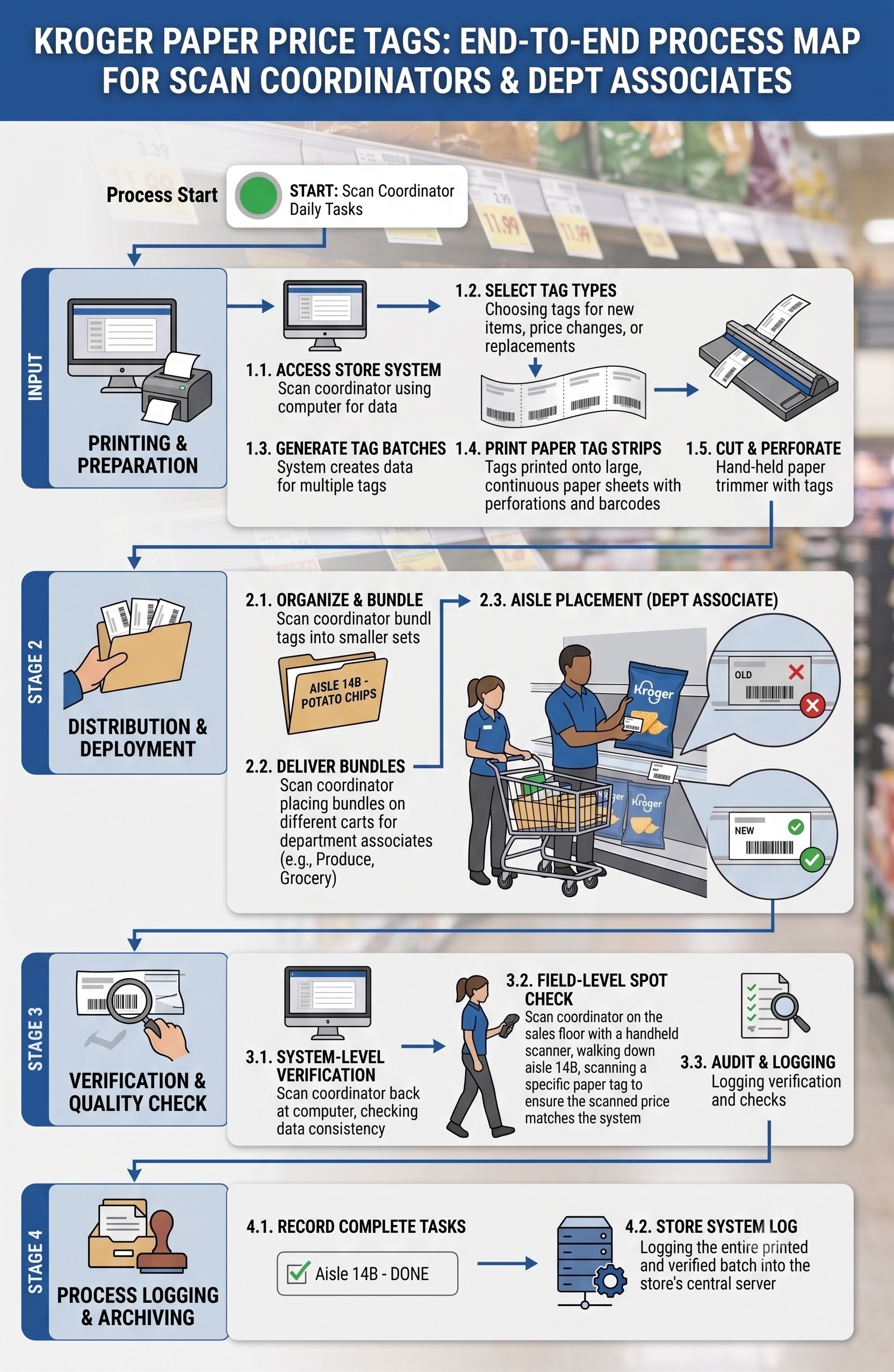
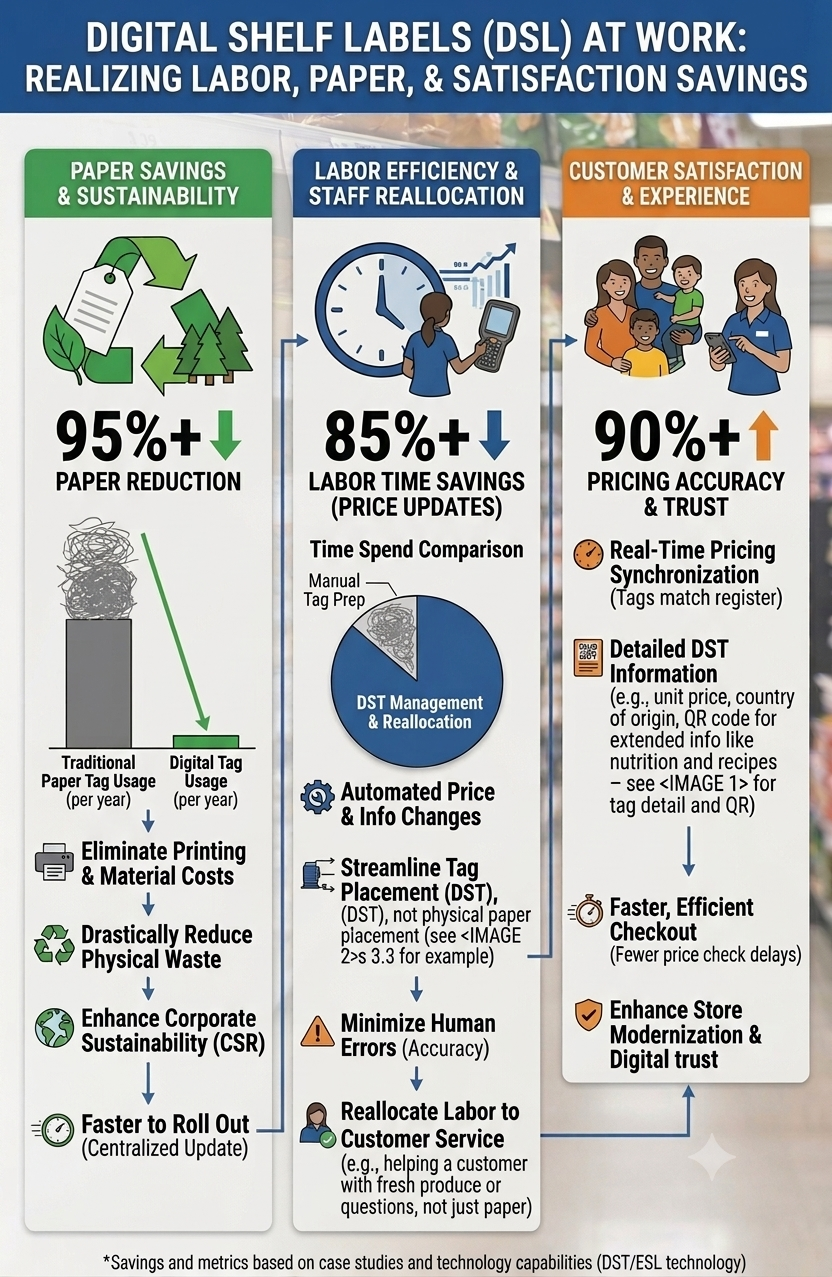
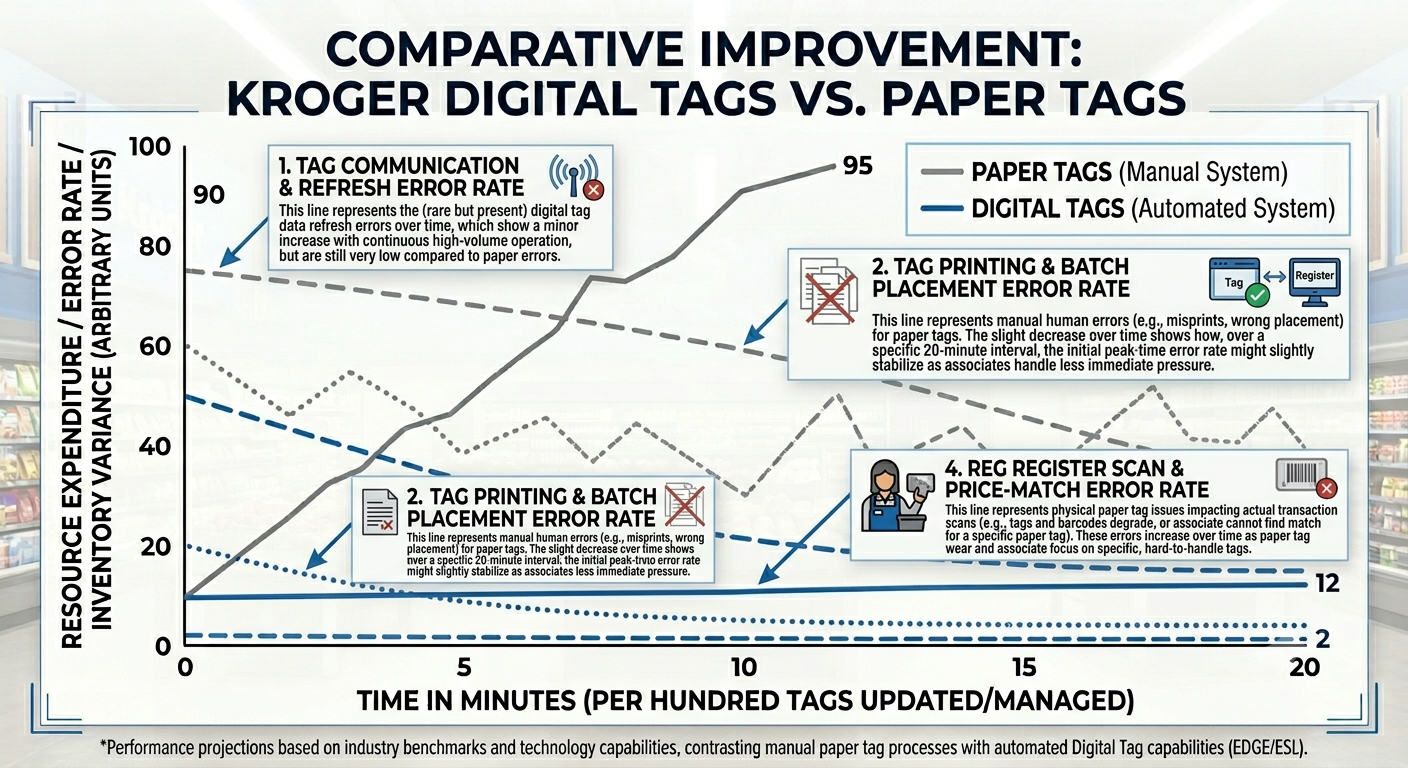
DSL Process Map and the Benefits of Going Digital
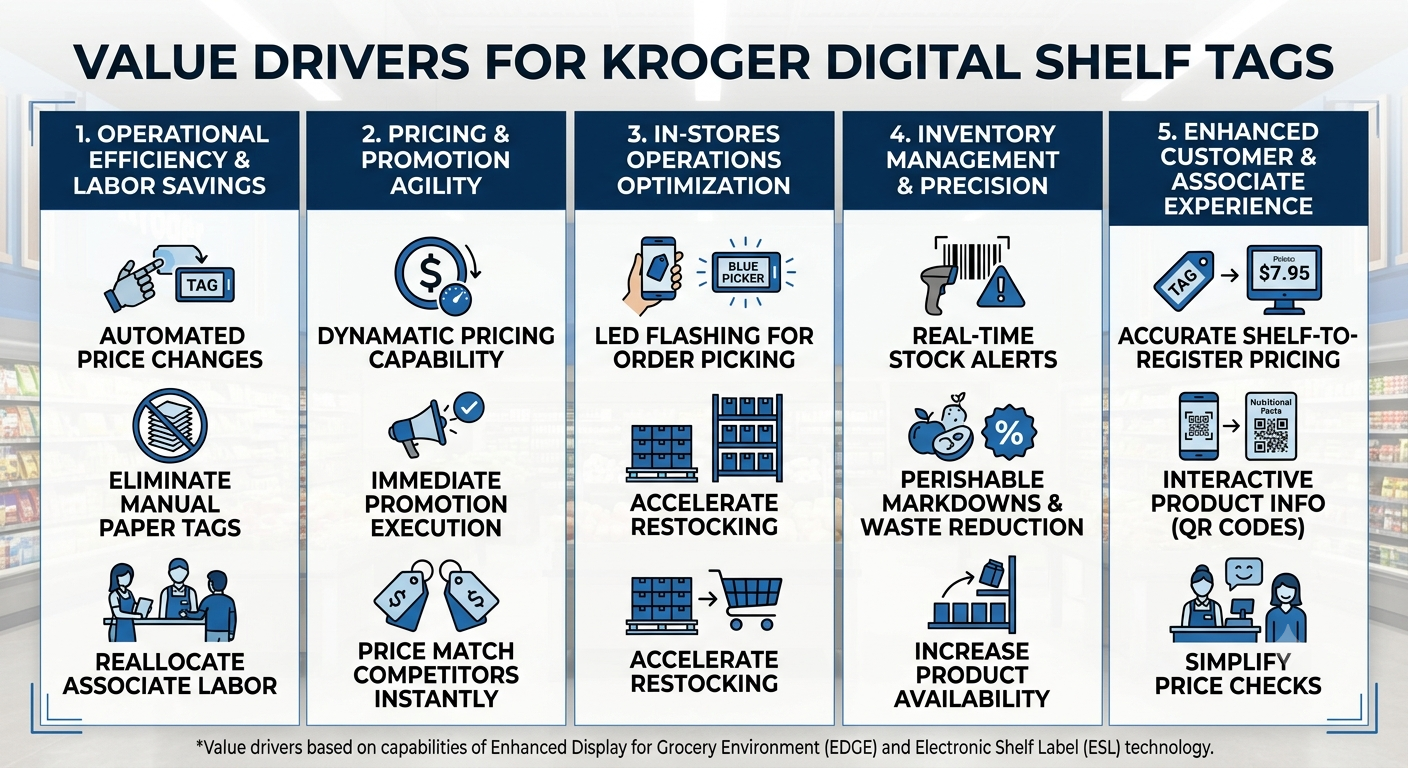
Going digital can streamline operations, enhance efficiency, and improve overall performance. We’ve outlined the key benefits and provided a clear understanding of how this transformation can positively impact various processes.
Solution
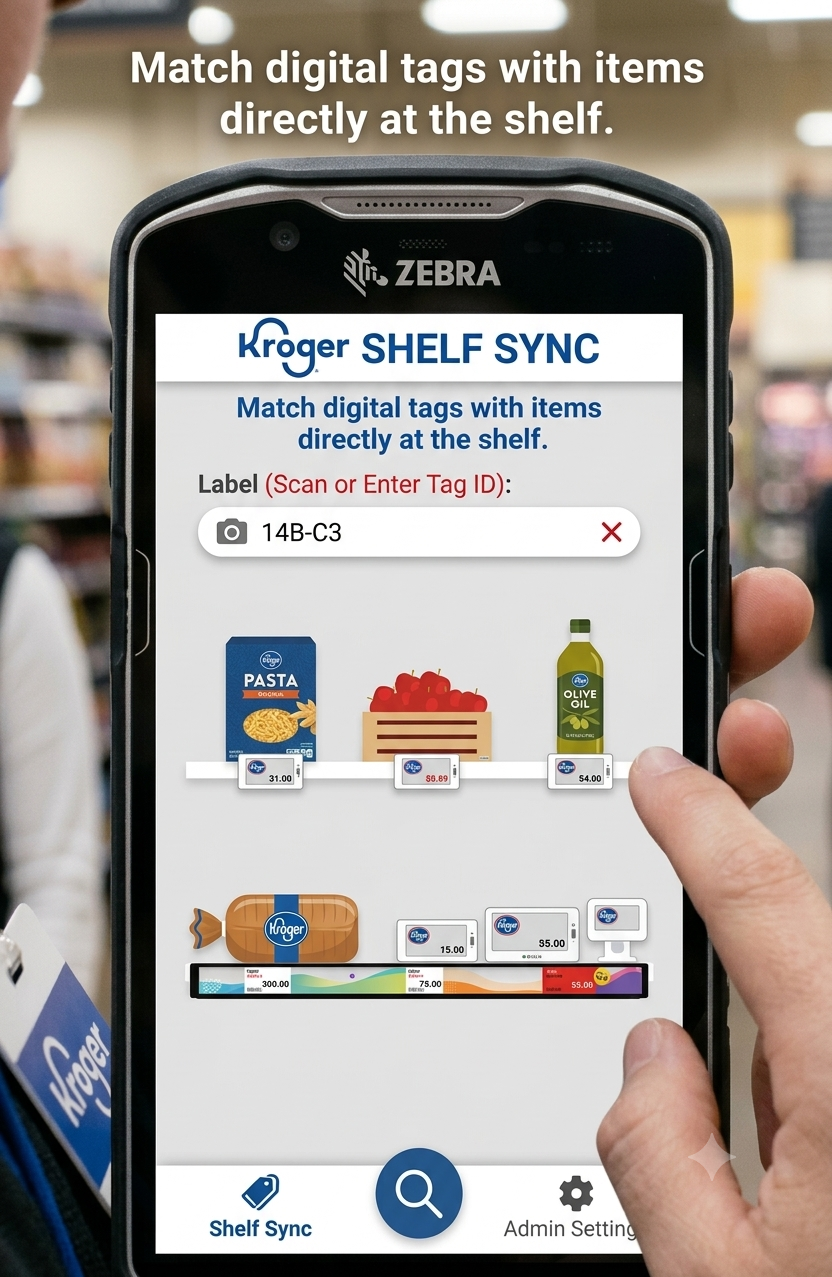
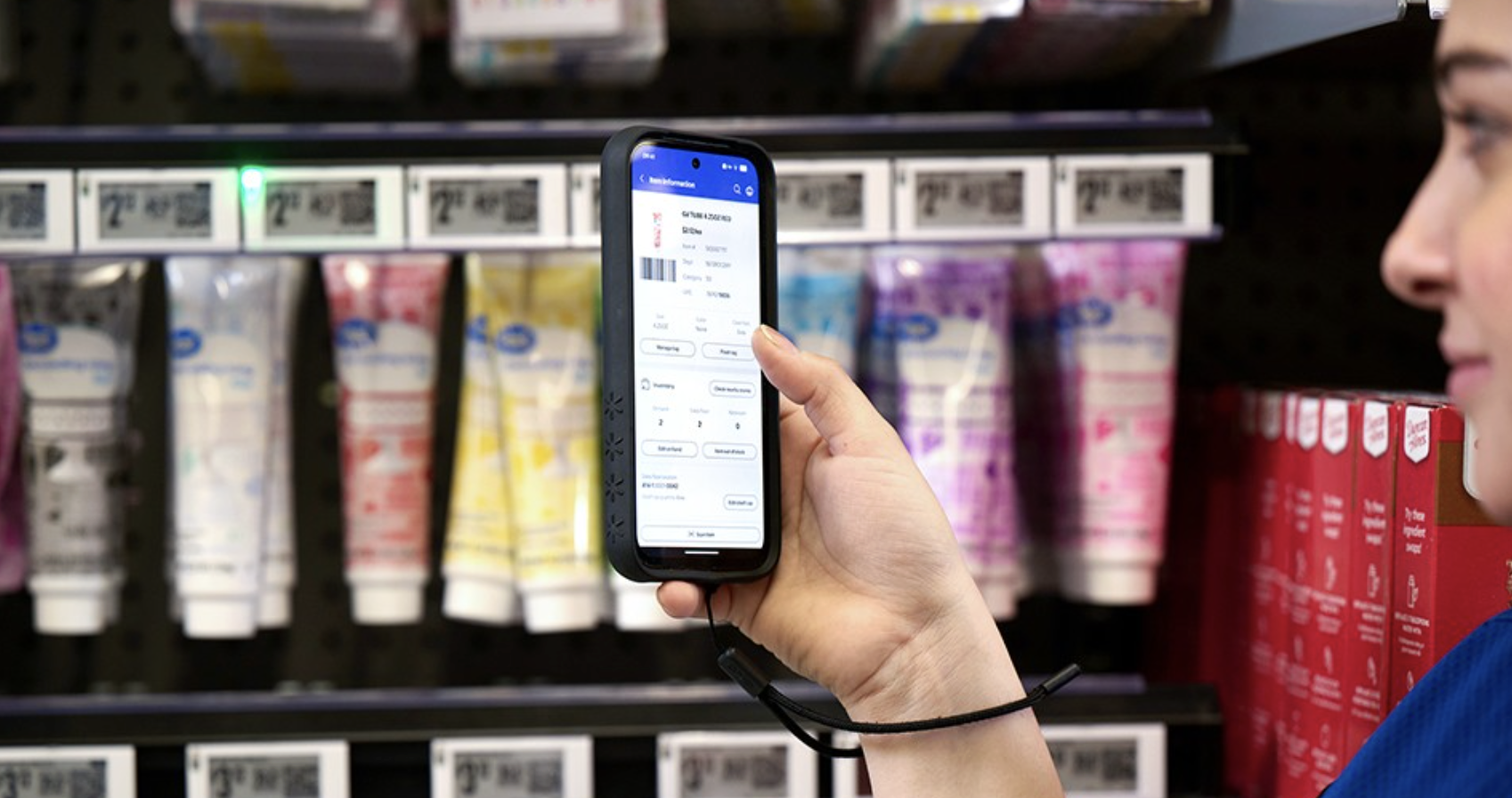
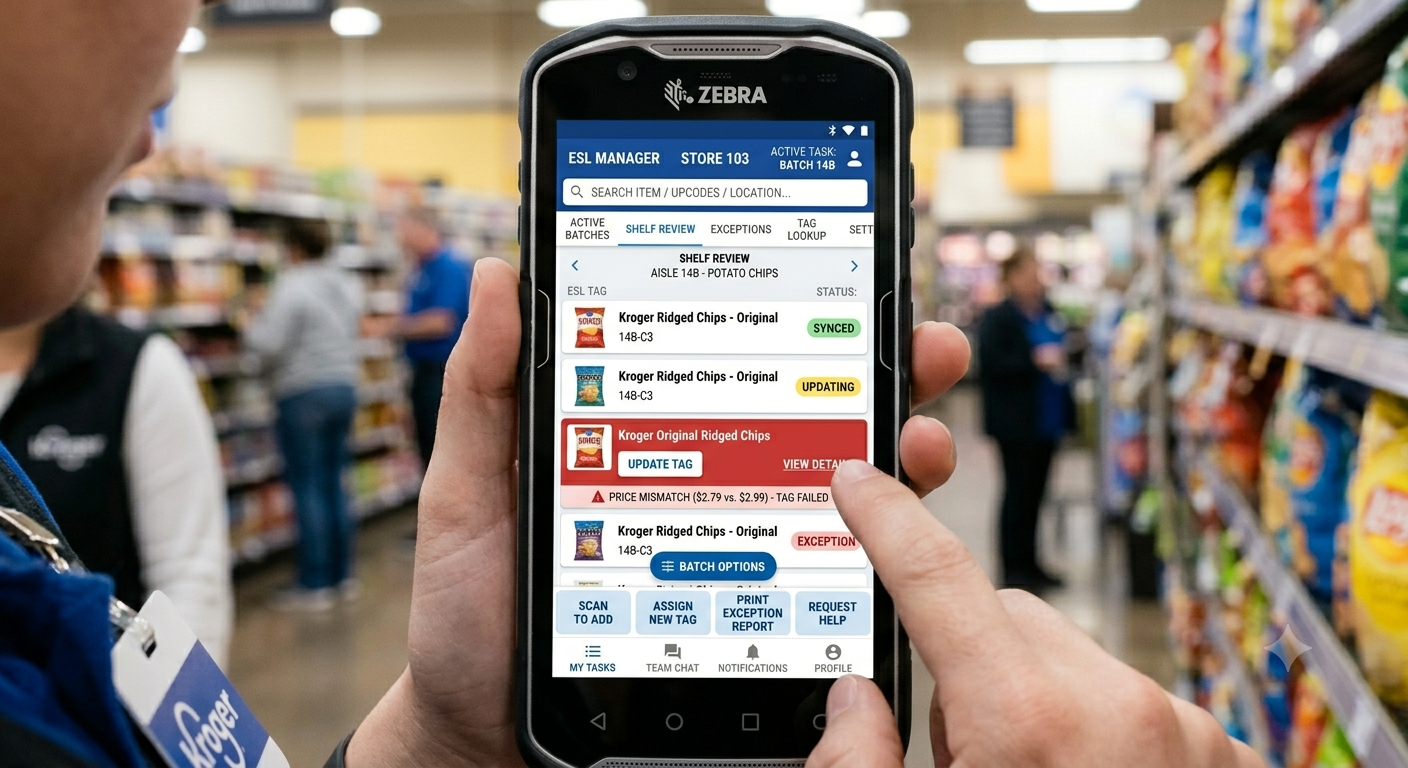
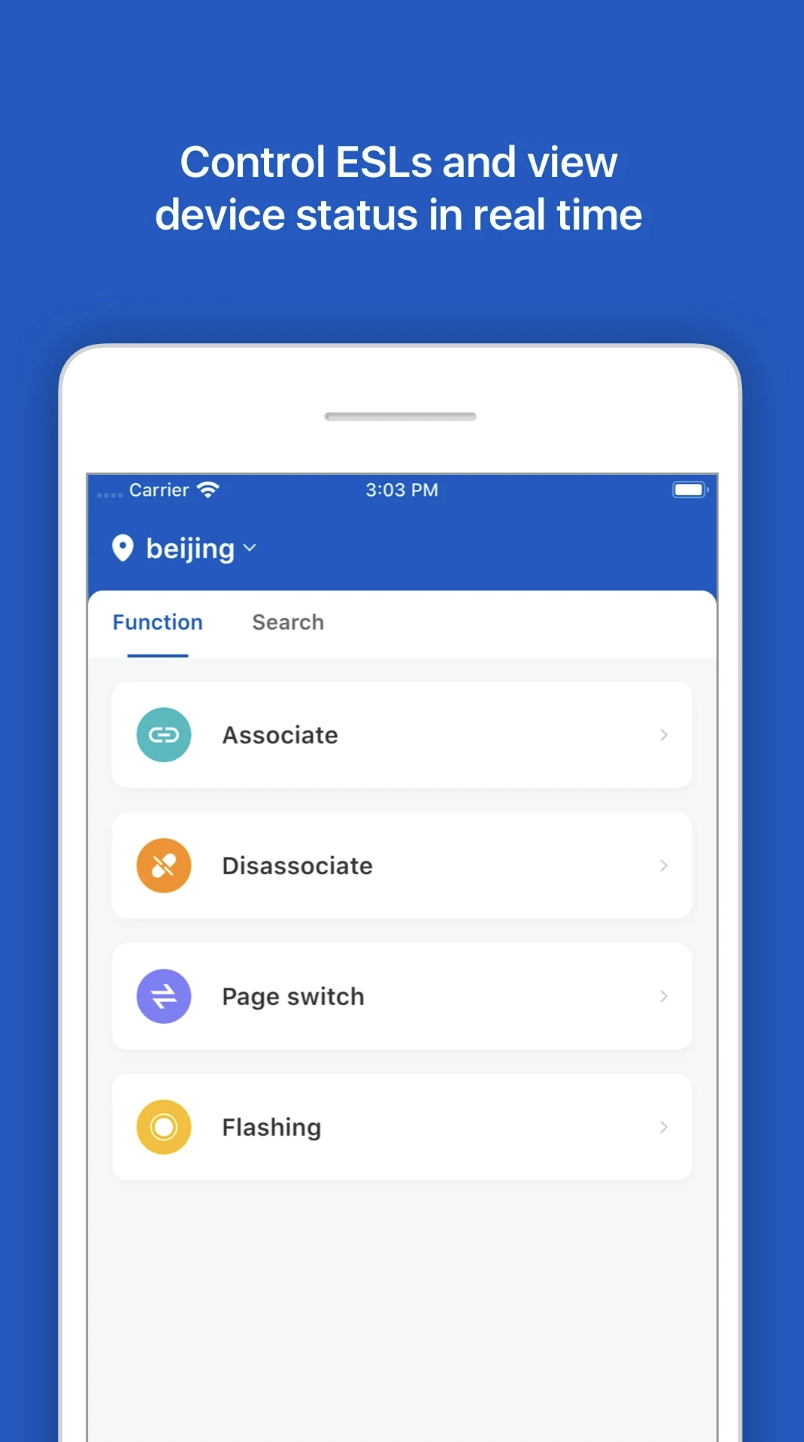
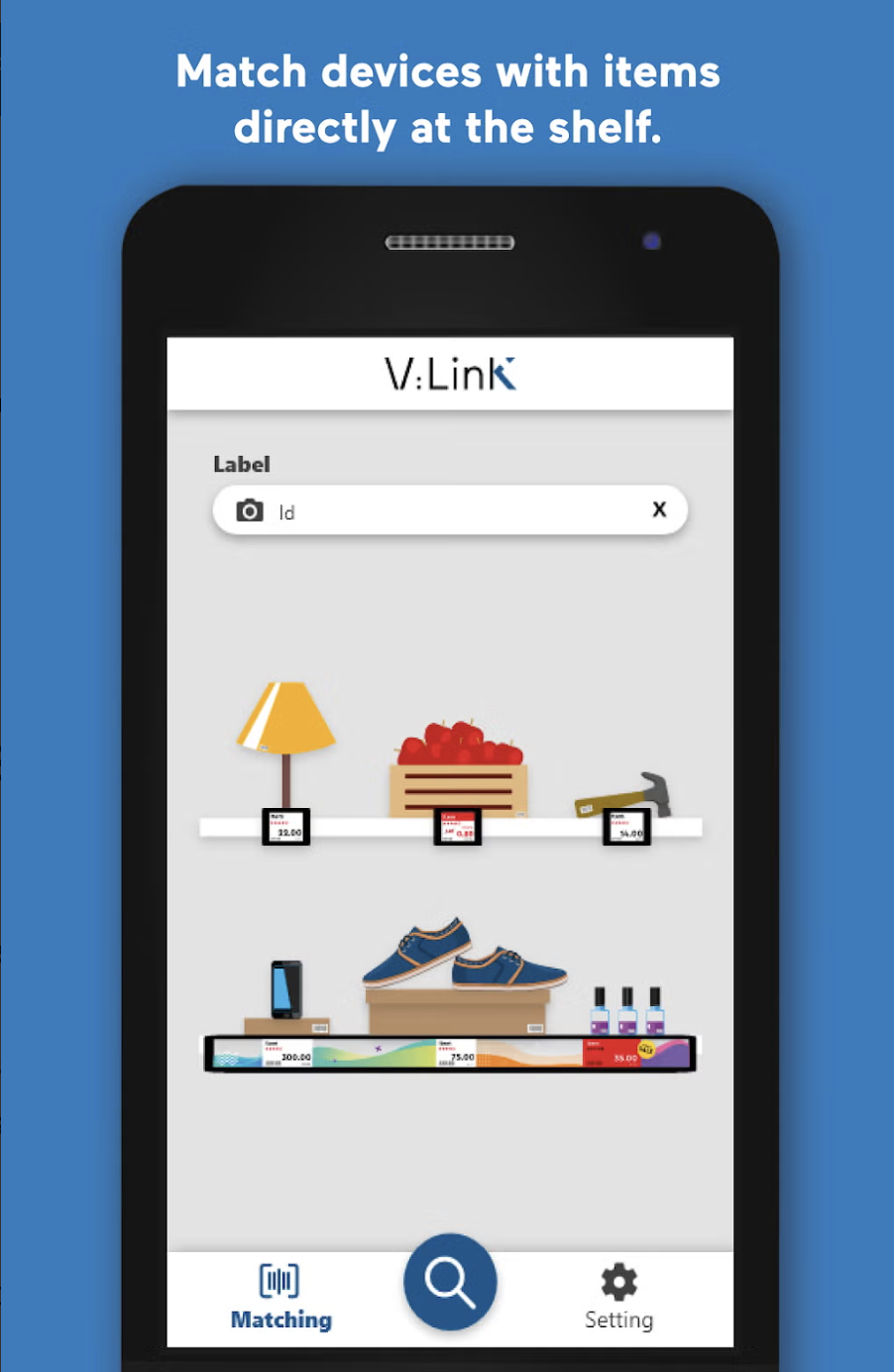
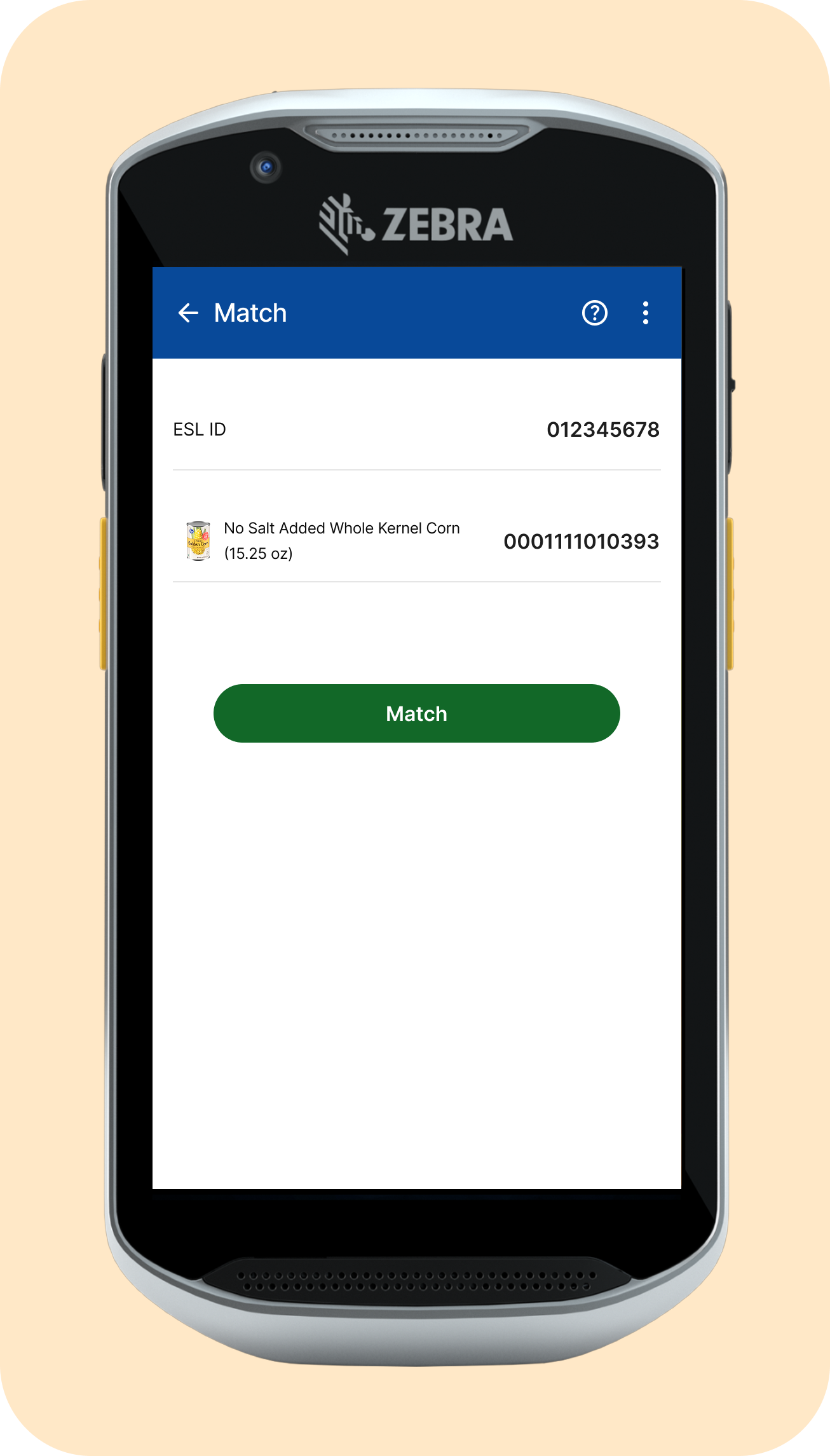
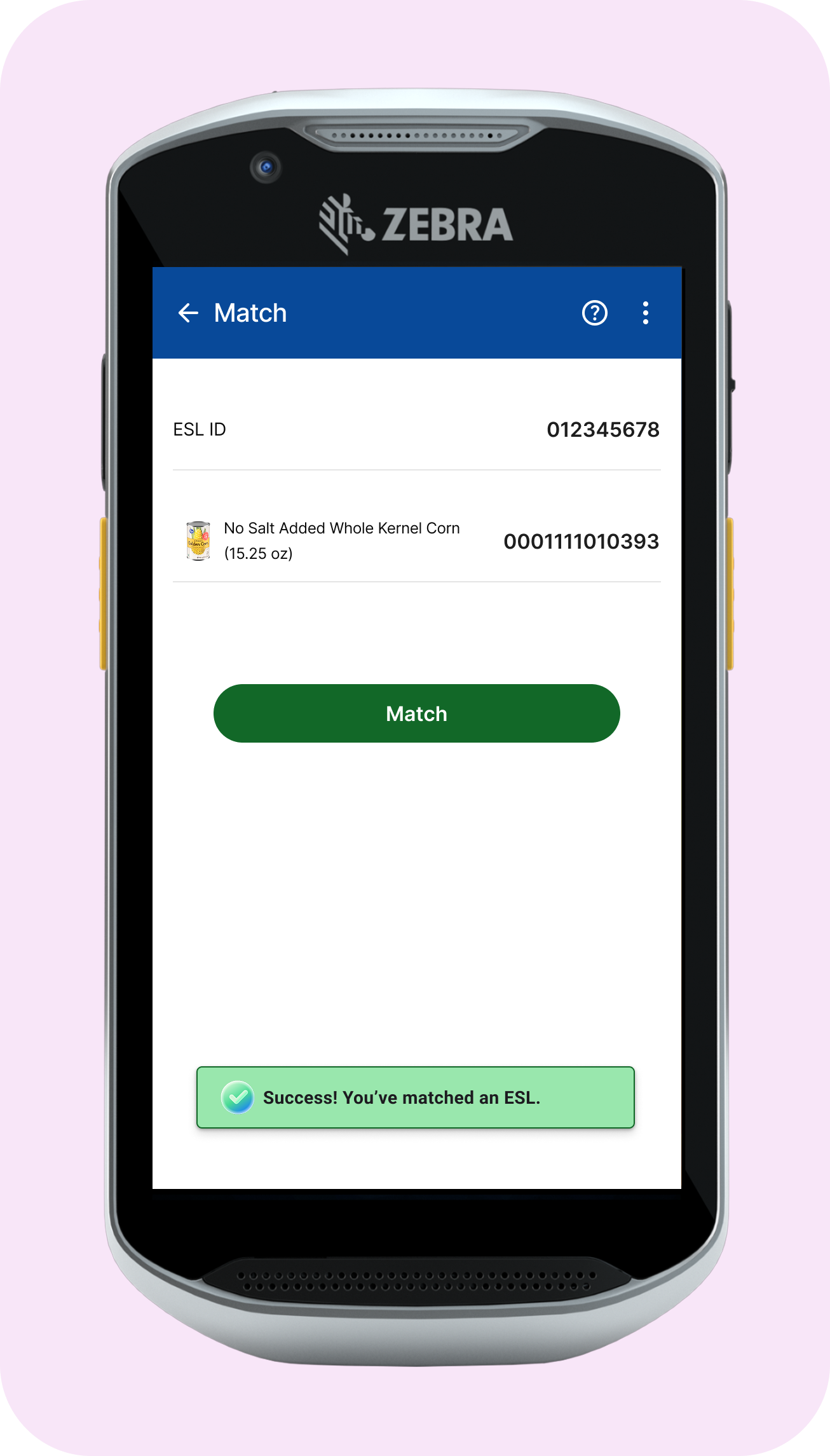
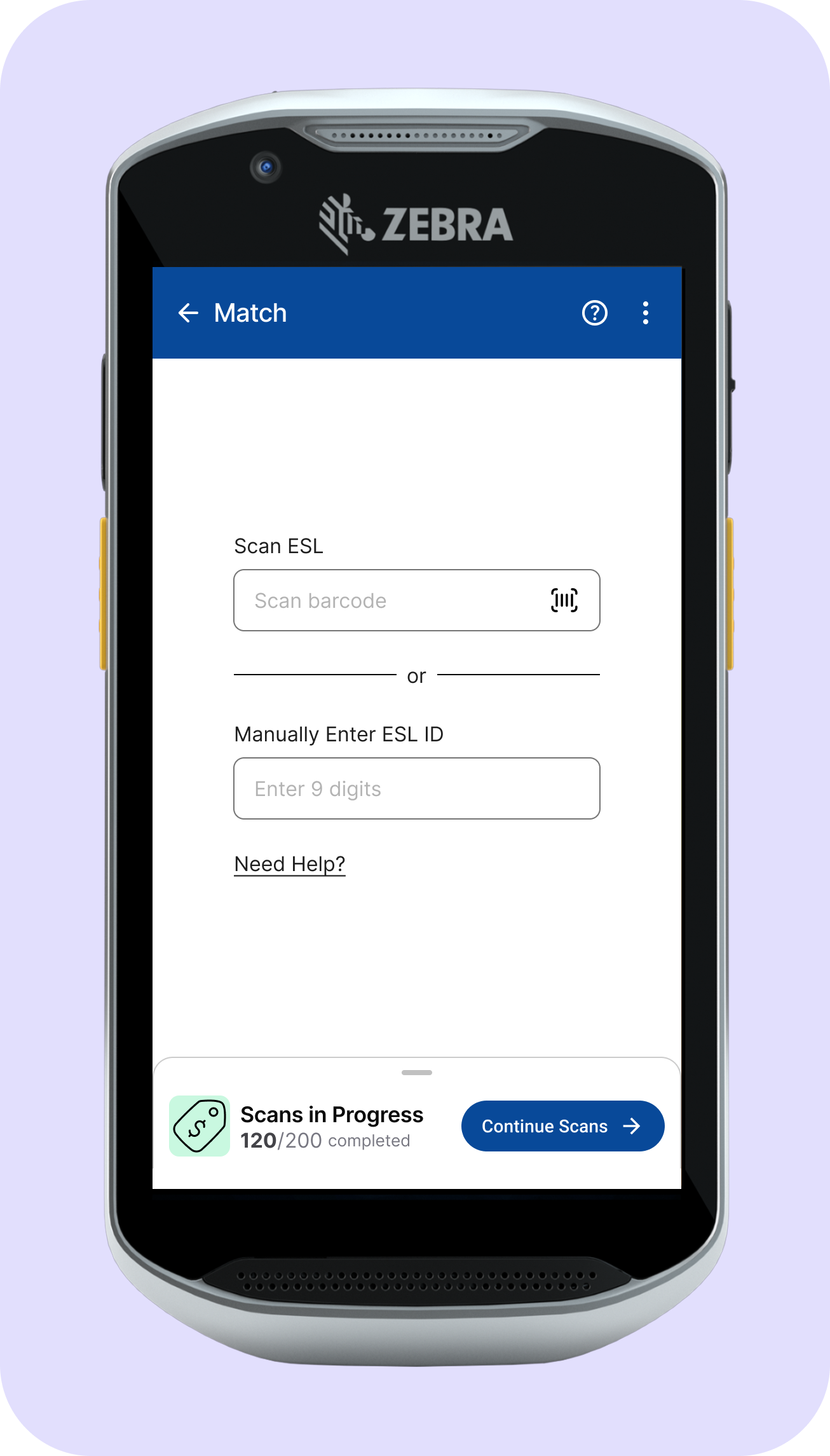
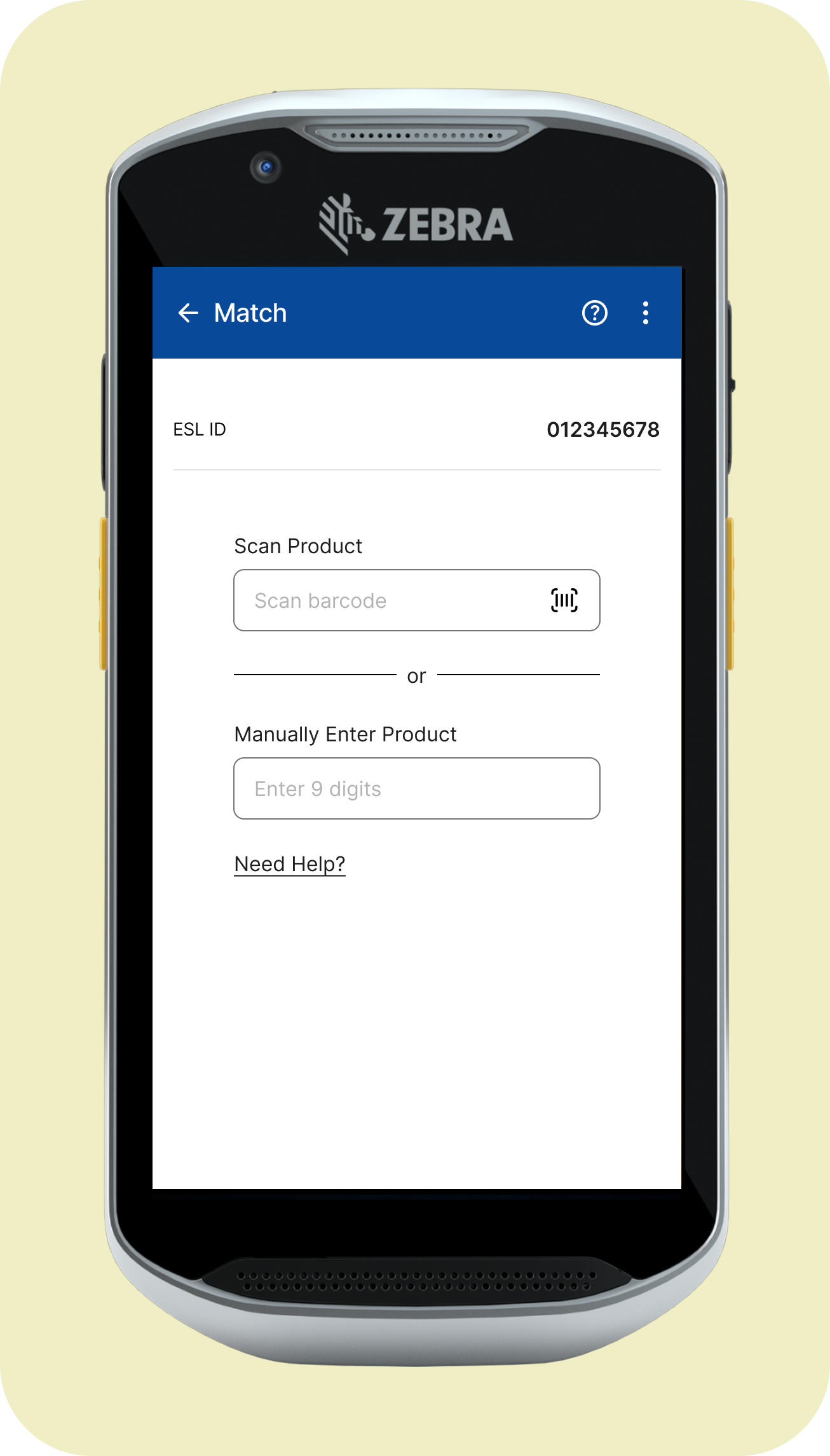
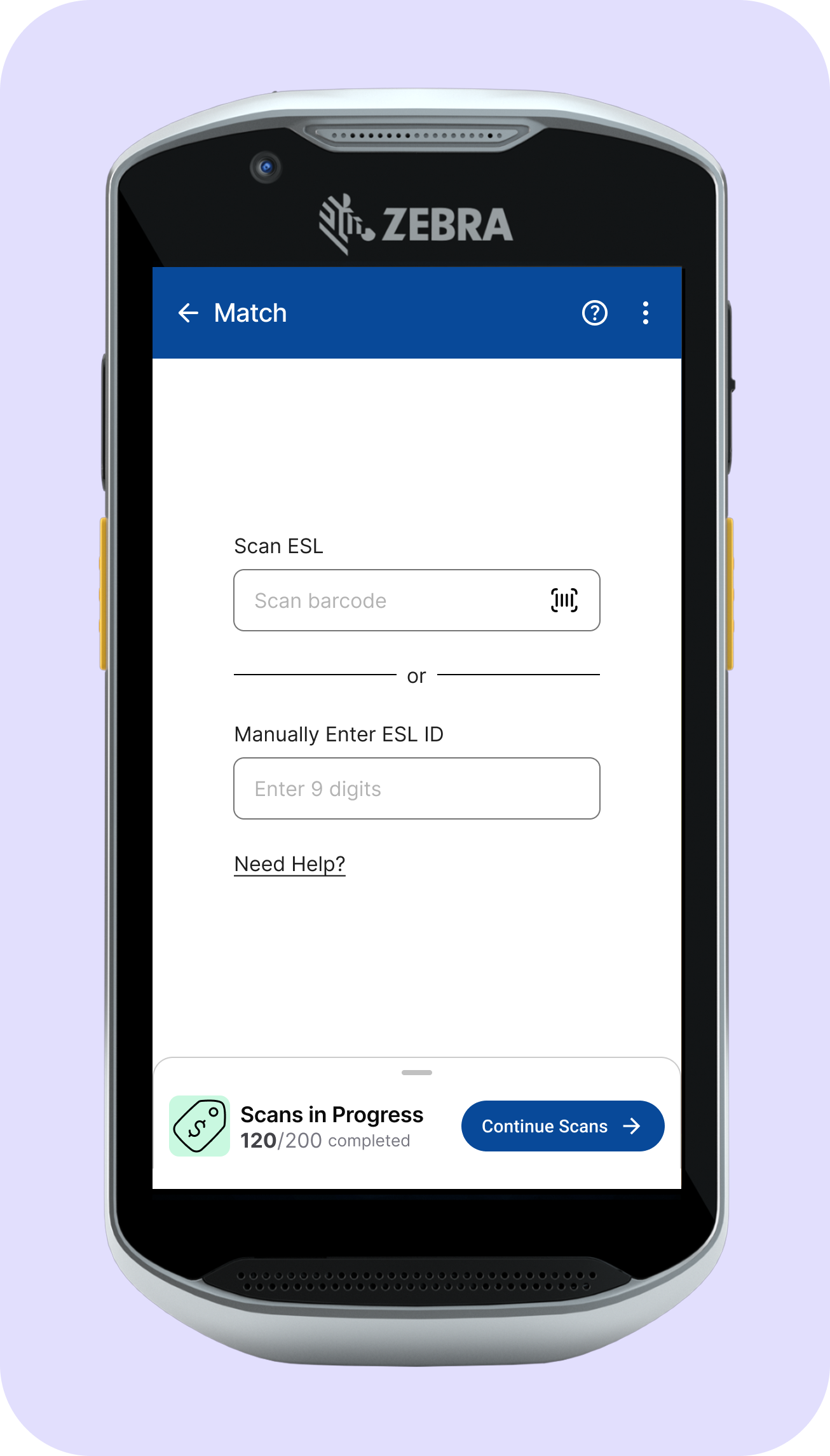
DSL app interface replicated competitor UX patterns for a minimum viable product. We designed a lo-fi solution to assess feasibility, with the anticipation of scaling to the enterprise.
Product requirements aimed to establish the most feasible hardware solution, including fiscal and operational costs.
Our UI solution emulated competitors while preserving the integrity of the Kroger brand and design system, and made significant UI/UX improvements that we knew would scale in this high-churn, high-turnover environment.
Testing phases were conducted by business partners and engineering teams, and the app was deployed without Beta or Gamma phases.


Solution
Minimum Viable Product
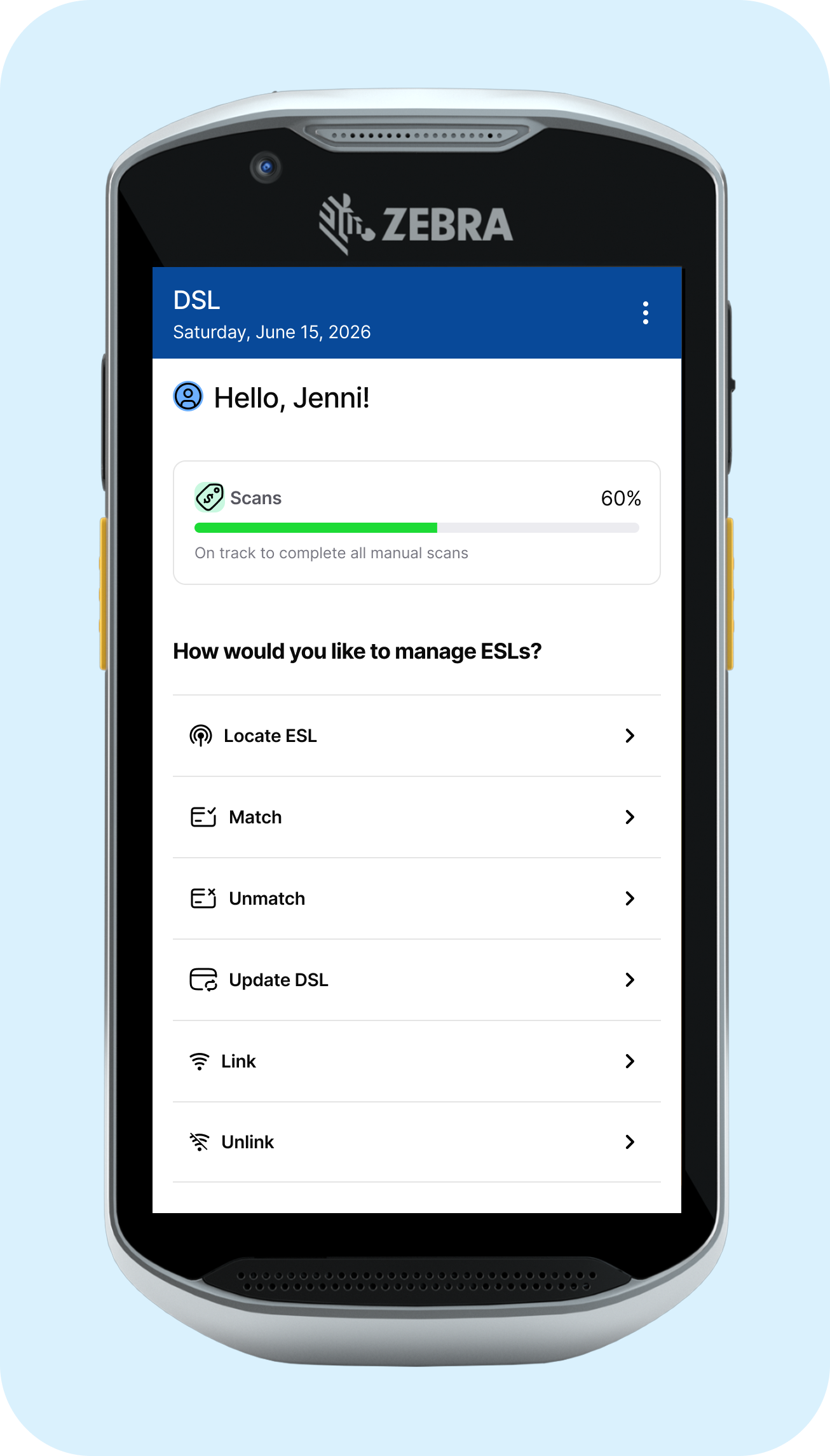
This solution addresses the requirements of Kroger's design system and the success metrics for the pilot phase. We see the pilot phase as a valuable learning opportunity that ensures a smooth transition for end users from paper to digital formats. This approach allows users to engage their senses and gain a better understanding of the interaction between digital tags and IoT technology, rather than merely launching a beta phase.
Business partners collected feedback through various channels, including in-app feedback loops, on-site training visits, and email forums.

Outcomes
The initial UI/UX solutions deployed to both the Mid-Atlantic and Cincinnati divisions then expanded to Central, Columbus, Dillons, and Michigan divisions.
Tens of thousands of labor hours are reduced and refocused on personal customer service and complex tasks. Paper waste is reduced across its network each year. While intelligent selling and dynamic pricing enable the customer satisfaction guarantee.
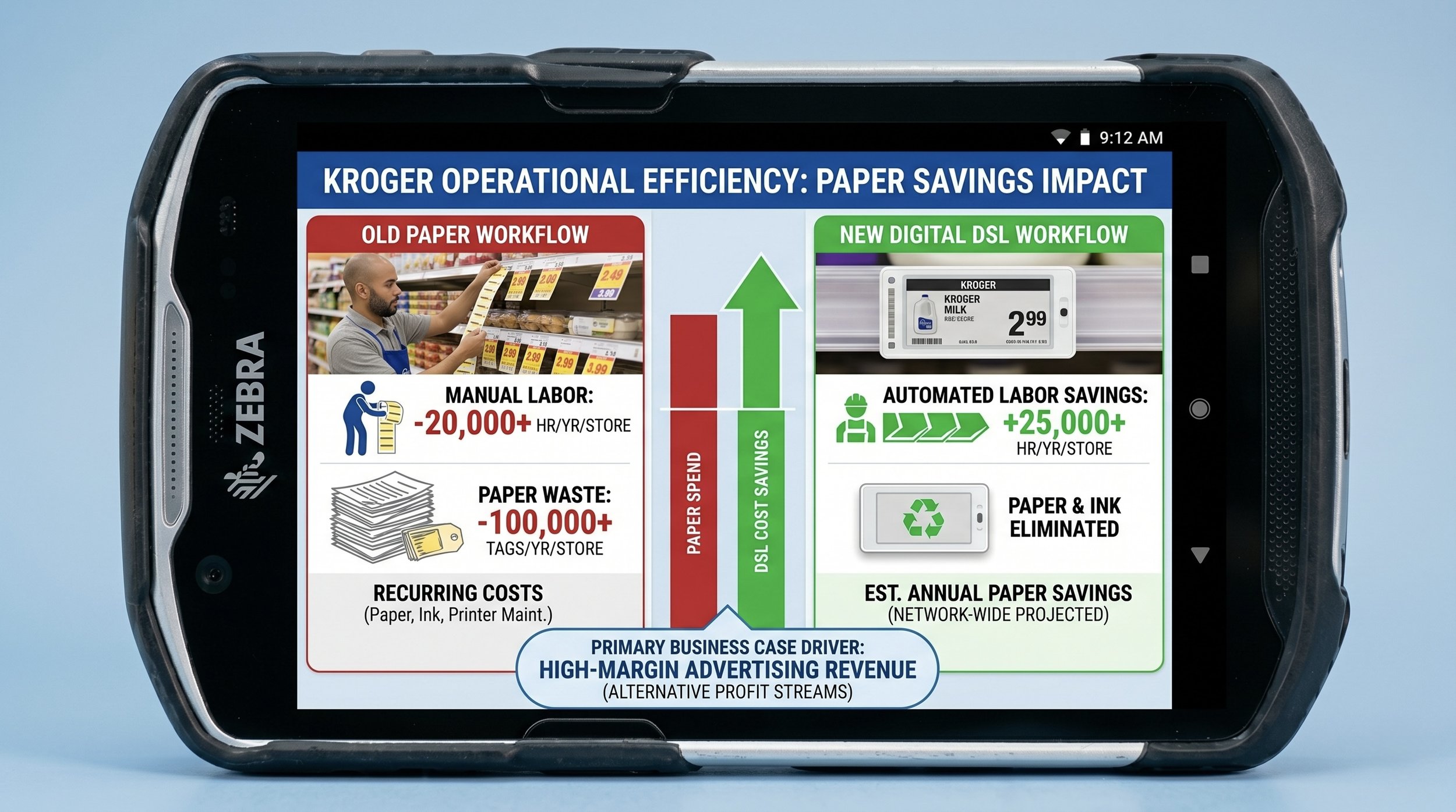
(projected outcomes, not actual)